Showing posts with label submitting to anthologies. Show all posts

Monday, February 7, 2022

Tips for Submitting Short Stories

By Shannon Lawrence


The short story world can be an emotional roller coaster, but it’s a fun, creative, and empowering experience in many ways. The hardest part can be overcoming the fear of submitting, which is more about the fear of judgment and rejection. Here’s the thing, though: a rejection is just a polite email saying the story doesn’t work for that particular publication. It’s not a personal judgment and has nothing to do with you as a person. It usually isn’t even about your story. Often, a story gets rejected because it doesn’t fit with that publication or a theme that has formed among the accepted stories. Even if the editor doesn’t like this story, that’s a matter of personal taste. Someone else will like it. There’s no reason to keep that story from the people who don’t even know they want it yet, so submit that puppy!
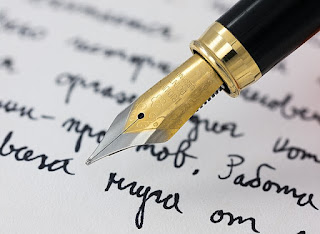
Fountain Pen Writing (Literacy), by Peter Milosevic, Wikimedia Commons

Once you get over the fear or discomfort involved with submitting, there’s the matter of figuring out where to submit the stories you’ve written.

Here are a few ways to get started:

  • 1.      Submit to publications you already read and enjoy. Their websites will have submission guidelines.
  • 2.      Use an online resource, such as Duotrope (annual fee) or Submission Grinder (free). These sites allow you to plug in information like story length and genre, then return publications matching those criteria and open for submissions.
  • 3.      Join groups on Facebook that are specifically about open markets for short stories. There are some that are general, while others are genre specific.
  • 4.      Check out “best of” anthologies to see where those stories were published in the first place.
  • 5.      Look at where short story authors you like are getting published and review the guidelines.
  • 6.      Subscribe to blogs or newsletters where they announce markets open for submissions.

After choosing a market (a magazine or anthology), the next step is to check their submission guidelines and determine that A. your story fits what they publish, and B. your story is formatted correctly to their specifications. If these are a go, check the guidelines again to see how they expect stories to be submitted. This may be via an email or through a submission portal. It’s far rarer, but some publications still take mailed submissions. Ensure you observe all their submission guidelines throughout the process, as different publications have varying requirements and stories not meeting those requirements may be rejected without having been read.

Android Email 8.1 Icon, Google, Wikimedia Commons (Public Domain)

Now submit! But don’t just wait to hear back. Instead, get that next story written and submitted. Much success to you!

Have you ever submitted a short story? How did it go? Do you have any short stories waiting for submission? What’s holding you back from submitting?

A fan of all things fantastical and frightening, Shannon Lawrence writes primarily horror and fantasy. Her stories can be found in over forty anthologies and magazines, and her three solo horror short story collections and her nonfiction title, The Business of Short Stories, are available now. You can also find her as a co-host of the podcast Mysteries, Monsters, & Mayhem. When she's not writing, she's hiking through the wilds of Colorado and photographing her magnificent surroundings, where, coincidentally, there's always a place to hide a body or birth a monster. Find her at www.thewarriormuse.com.


Monday, January 11, 2016

Submitting to Anthologies: What You Should Know and Why You Should Give It a Try

Today we welcome L.G. Keltner, winner of the IWSG Anthology Contest!

Anthologies are a great option for anyone who writes short stories. One obvious reason why they’re so good is because of the exposure. A reader who was previously unfamiliar with your work may pick up an anthology and fall in love with your story. From there they may do some research to see if you have any other works available. What author wouldn’t love to have this happen? I know I would!

While there are many ways to get your short stories out into the world, there’s another advantage of submitting to an anthology that I appreciate. They typically have a clearly-stated theme in the guidelines. For the writer who may be struggling to come up with a good story idea (and we’ve all been there, haven’t we?), this may be just what they need. I’ve gone through listings for upcoming anthologies and almost always walked away with a new idea for a story. Even if I don’t end up meeting the submission deadline, I still have a possible story swirling around in my brain.

So, how to you go about finding anthologies that are seeking submissions? One way is to join writing groups online, and IWSG is one of the best. There are also plenty of other groups on Facebook and Goodreads. There’s also a thriving writing community on Twitter. Writers are usually willing to share information about writing opportunities, so keep an eye out! There’s also the rather straight-forward method of doing an internet search for anthology openings. This may not be the most elegant of methods, but it works.

When you do find an anthology opening that appeals to you, read the guidelines closely. I like to write out the guidelines by hand so I’m certain that I haven’t missed anything. If you don’t follow the guidelines, your submission will be disqualified regardless of the quality of your story. You don’t want to invest all that time and creative energy only to have this happen. It’s both disappointing and embarrassing.

The guidelines will give you specifics about theme, word count, where and how to submit, the contact information you need to provide with your submission, and payment. Sometimes you’ll also find legal information regarding what to expect following publication. Be sure that you understand the legal terms presented, and if anything doesn’t make sense to you, research it!

One of the most common questions people have about being published in an anthology is how they’ll be paid. This is understandable. We may write for the love of it, but getting paid is nice too! There are generally three types of compensation possible, and there are pros associated with each.

  • Non-paid anthologies: These are the ones where there’s no monetary compensation. This shouldn’t necessarily deter anyone from submitting since you still benefit by reaching new readers.
  • Up-front payment: This is where you receive a one-time payment for your story. The benefit of this is that you know how much you’ll be receiving, and you’ll get all of that money at one time. It may even be a sufficiently large amount that you can treat yourself to something nice.
  • Royalties: This is where you receive a percentage of the royalties as a payment. The amount you make is contingent upon how many people buy the anthology, so you could end up making very little, or you could end up making a lot more than you anticipated. It could go either way, but you do get the benefit of getting a little something for your work at regular intervals. A few extra dollars here and there never hurt anyone.

This is all useful information to have if you’re considering submitting to an anthology, but there’s one last thing I’d like to say on this subject. You need to know about the submission process, yes, but there’s one obstacle you need to overcome before you even get that far.

Lack of confidence.

I’ve seen people look at the theme for an anthology and say they don’t think they could write a good story along those lines, even though they may want to. I’ve also seen people with a brilliant story idea, but they don’t think they can pull it off. My advice for you is to ignore that nagging doubt and try anyway.

While working on “Felix Was Here” for the contest, I felt like I was in over my head. I’ve written a lot of science fiction, so I’m not new to the world of the speculative. Still, my story is also set in the 1940’s, which makes it historical. Historical fiction is something I’d never done before, and the amount of research I needed to do was significant. I also faced the challenge of staying within a small word count (which has never been easy for me) while building a world. It proved to be a daunting task, and there were several times when I was tempted to give up on it. I loved the story idea, but I didn’t feel like I could make it happen. Thankfully my stubbornness prevailed, and I got it done. I can’t tell you how shocked I was when I found out that I’d won, and how grateful I was that I didn’t quit.

Don’t sell yourself short. Keep writing, keep submitting, and keep pushing your boundaries. You never know what you’re capable of until you try.