Monday, August 29, 2022

Cross That Bridge When You See It Coming!


What if this or what if that. Questions that can tend to bog down the mind, spirit, and life. But what if you just stopped with the what ifs until the what if actually is seen coming?

When you can see through the fog that a bridge is on its way concerning your what if then start thinking about the what if and preparing for it. Otherwise, is it really an effective use of your time? Maybe if you are waging a war on the neighborhood or something you'd need to know the ins and outs of all the what ifs, but does it benefit otherwise?


Here you are. You shine a light on all corners of the what ifs. You let your mind go to every imaginable thing that might occur. No matter how outlandish. You focus on them. You let them fester. You keep shining that light and get nothing done.

Guess what? No what ifs came true because you did nothing. I guess that is one way to prevent the what ifs. Another way is to realize the likelihood of most of those coming true is the same odds as aliens probing you.

The mind goes to many a place. You want to protect yourself whether it is just a defense mechanism or fear or both. But what's to protect if nothing gets done?


So you throw away the what ifs and start. You get things done. But here comes the bridge. You can see it more clearly. The what ifs are there. You were right. You now have to deal with something you thought up or should have thought up. It is so bad. You have to deal with an edit.

Is that bridge really scary? So you have to edit again. Is it worth going on and on in your own head about it? Which actually takes more time? Which is actually a waste of time?


Maybe you need to cross the bridge and round the corner and find the what if wasn't even a what if. Maybe it was just part of the process that you worried about for little to no reason. 


Maybe the bridge is crystal clear and you can cross with ease. Maybe it's just a bridge everyone crosses and nothing to worry about. Maybe we should stop thinking about the maybes and just go to it as well. One foot or word or edit or release after the other. 

And then...what if...maybe...you finish. You save time. You learn. You grow. You stumble. You get back up. You go again. 
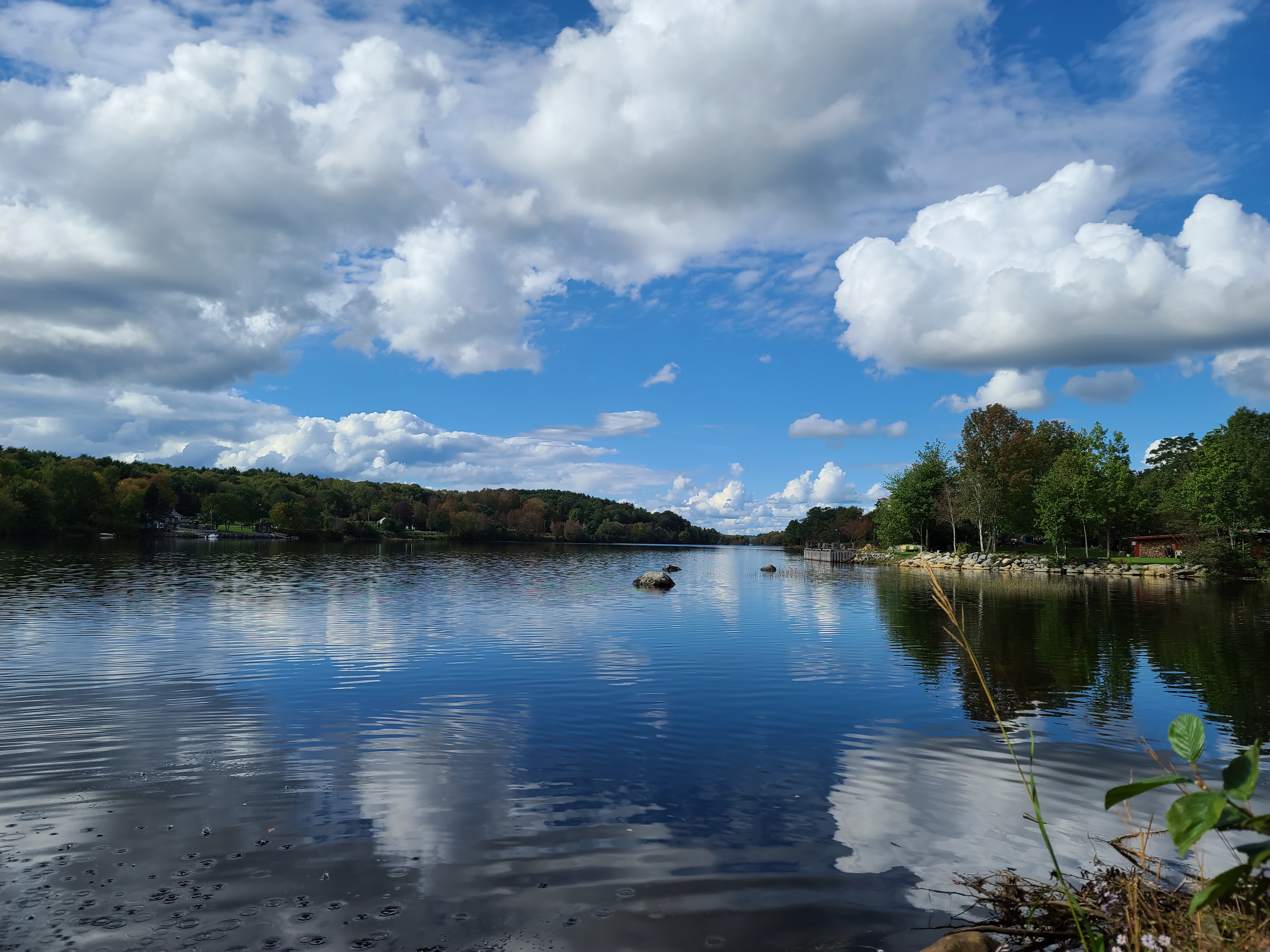

You find the other side of the bridge isn't so bad. You find your what ifs aren't as bad as what you thought and dwelled on. You find you accomplish a lot. You find you can prepare for the what ifs that do happen when you see them coming and not waste time before. You may also find your sanity doesn't take a hit.

But what if I get a bad review? What if no one likes it? What if I suck? What if...

So what if you do? What's the worst that will happen? 

If you get a bad review do you think the reviewer will hunt you down and go all Misery on you because you wasted their time? Or do you think they move on, you move on, and you realize you can't please everyone no matter who you are or what you put out? Which is more plausible? And thinking of it, does it really seem that bad? Not so world ending when thinking of it realistically. 

Worrying about the what ifs won't get the job done. Carry on and deal with the bridges when you see them coming. Don't deal with the 50,000 bridges before you even begin that will probably never happen. 

Do you put obstacles in your way? Do you worry about things you'll never control? How many what ifs did you think up on your first book? Your latest book?

Wait. What if no one likes this post? What if no one comments? What if...I'll live.

Enjoy life. Forget the strife.

Monday, August 22, 2022

How to Find the Motivation to Write Your Book by Alyssa Hitaka

Writing is hard. It’s thrilling, invigorating, and rewarding, sure—it’s definitely worth doing—but that certainly doesn’t mean it’s easy. Once you’ve come up with a great idea you’re excited about, it can be difficult to put pen to paper and bring your lovingly crafted story to life. Today, we’re presenting a few key tips that can help you find the motivation to write when you’re feeling lackluster.


Remember Your Why

Why do you love your story? Why does it deserve to be told? Why do you want to write? Why are you putting yourself through all this? Amid all the toil of writing, it can be easy to forget why you’re doing it in the first place. So if you find yourself succumbing to the allure of procrastination, take a moment to remember why you embarked on this journey in the first place. Rediscovering your motivation can give you renewed energy to tell your story.

Break Down Your To-Do List
Writing a novel takes a lot of effort. It’s not something you’re going to finish in an afternoon. When you think about everything that must go into your story, it can easily become overwhelming. That’s why it’s best not to think about it that way.
Any task—even the biggest, most intimidating projects you might undertake—can be broken into numerous smaller tasks. You might not be able to finish a chapter today, but you can finish a page. If you’re overwhelmed by the tasks at hand, keep breaking them down until they’re doable, and work from that level. And it’s okay if you have to break your tasks down to a very basic level. Any progress is progress, and it’ll build up over time—so it doesn’t matter how little it is on a daily basis.


Plan Carefully Before Diving In

There are probably certain sections and scenes in your story that you can’t wait to just dive into and start writing. But this impulsive style isn’t usually the best way to tell your story. A novel requires require a well-developed plot with relatable characters and realistic turns of events, and until you carefully flesh out an intensive outline of your plot, even you don’t know all the finer details of your story.
So, before starting to breathe life into your characters, take the time to develop a careful outline of your story. Covering all the major (and even minor) plot developments allows you to view the flow of your story from a distance and make necessary tweaks before you start writing. It also gives you an opportunity to think deeply about each major section of your story, which can help you identify plot holes and other insufficiencies that would be much more difficult to rectify after you’ve already written your manuscript. Once you have a well-thought-out plot outline to guide you, you’ll have much more confidence when you start writing, boosting your motivation.

Abandon Perfectionism
One of the factors that frequently keeps writers away from the keyboard is the fear that their story will be less than perfect. Well, of course your story won’t be perfect—that’s impossible. Even the most beloved, world-famous authors can’t pull that off. Abandon the idea of perfectionism by reminding yourself that your story deserves to be told, even if not “perfectly.”
When writing your first draft, you don’t need to be concerned with “perfection” at all. At this stage, all you should be focused on is converting your story into words on the page. It can be clunky and full of grammatical mistakes. That’s fine, because this isn’t what you’re publishing. Reminding yourself that you’ll revise your story through various drafts frees you from the paralysis of “perfection” and allows you to move forward with your writing.


Reframe Your Fears

Sometimes you may put off writing under the fear that you won’t be able to do justice to your beloved storyline, failing the characters you now love so much. We’re not going to pretend that that thought isn’t scary. But you know what’s even scarier? Never writing your story at all.
If you’re feeling unmotivated, spare a thought for your future self. Think about how accomplished you’ll feel having written your book, how rewarding it will feel to know people are reading and loving your story, and how you might build up a fanbase for future stories. Sure, that’s motivating. But what’s even more important to think about is an alternate future where you didn’t write your book. Think about the regret you’ll feel, the potential you knowingly wasted. The way to save yourself is to write your book. There may be no motivation stronger than that.

Get Help
You don’t need to be alone on this journey. Whether it’s friends who can encourage you, beta readers who can offer valuable feedback, editors who can polish your manuscript, or professionals who can help compose a killer query letter to pitch your manuscript to agents, the world is full of people who can aid you in your novel-writing mission. We at QueryLetter.com are passionate about great books and helping the authors behind the titles. As agents, publishers, and authors ourselves, we’re in the ideal position to guide and encourage up-and-coming authors.

- Alyssa Hitaka, QueryLetter.com

Monday, August 15, 2022

A LOOK AT WORLD BUILDING AND THE READER EXPERIENCE


Pixabay.com Willgard

“We are all apprentices in a craft where no one ever becomes a master.”  
Ernest Hemingway, The Wild Years

WORLD BUILDING: Where do I start?

I learned to read before I started kindergarten.  Stories have carried me around the world and to worlds unknown. I fell in love a million times, fought battles in history and in space.  I have ridden dragons, horses, interacted with monsters, aliens, and the paranormal.  I have gone on great quests, archeological digs, infiltrated secret societies, solved murders, and laughed my ass off. I’ve had superpowers and welded magic. That is the joy of reading.  

I love fiction. My joy in reading translates into writing my own stories and worlds.  I have a knack for world building.  I am asked all the time, how do you worldbuild?  The answer: I start with character. 

NARROW FOCUS

World Build from the inside outward. Get inside your character's head, stand in their shoes.  Let them tell you about the world they live in.  Show the world through your character's eyes, emotion, and perception, along with all their flaws, fears, and angst. 

This method of world building from the inside out narrows your focus.  It can help stop you from overbuilding or getting lost in the creation of worlds. It keeps you focused on the character arc relationship to their world.  

How all this affects the storyline determines the things I build into my worlds, and the systems I create.  I admit for me character is king in drawing me into a story, so it is a big focus in my worldbuilding. 

Do you need to think about government, magic systems, modern, medieval, futuristic, the mechanics of a functioning world, or systems in place for the way of life? 

Yes, but think about what all those things mean to your character, their perceptions, and the restrictions the world places on them.  There is more to world building than just the world, without people/character it is just an empty shell.  People are the story of a living, breathing world.

THE READER EXPERIENCE

Don’t dump all the cool details of your world on the reader.  They don’t care about that. They only care about what the character cares about. 

Let the reader experience your world with the immediacy of living it through your character’s discovery and interactions with the world.  Rule of thumb for world building details, is similar to advice about backstory. 

Dribble, dribble, dribble–sprinkle, sprinkle, sprinkle.

Only show what is necessary to move the story forward and for the reader to understand the world and current scene, no more.  

WHY?

Readers seek the experience of the world through character emotion and consciousness.  What we remember about books and movies is the way they made us feel/experience, which is why we crave another story-hit, more, more, more.   

As much as we (the author) love all the neat things about our worlds, the reader doesn’t really care, unless the character cares which makes their savoir faire engaged, immediate and immersive

Just like living in the real world affects us, shapes and molds us, so will the world of your character shape and affect them.   

Let’s face it, if your goal is to publish, we write for the reader as much as we write for ourselves, because you need an audience. We want readers to read and love it, so reader experience is important. 

Use your character’s emotional attachment to places, things, and feeling of home–longing, or contentment, or discontentment.  World building is an external and internal journey with the character.

World building includes using all the senses, to create atmosphere, texture, and attachment:  Sight, Smell, Touch, Hearing, Taste, and 6th sense. 

STORY EXAMPLE:

Anne of Green Gables L. M. Montgomery uses the senses and emotions in such a way that her world is a character in itself.  Read the free Project Gutenberg ebook.

Chapter 1: First paragraph:

“MRS. Rachel Lynde lived just where the Avonlea main road dipped down into a little hollow, fringed with alders and ladies’ eardrops and traversed by a brook that had its source away back in the woods of the old Cuthbert place; it was reputed to be an intricate, headlong brook in its earlier course through those woods, with dark secrets of pool and cascade; but by the time it reached Lynde’s Hollow it was a quiet, well-conducted little stream, for not even a brook could run past Mrs. Rachel Lynde’s door without due regard for decency and decorum; it probably was conscious that Mrs. Rachel was sitting at her window, keeping a sharp eye on everything that passed, from brooks and children up, and that if she noticed anything odd or out of place she would never rest until she had ferreted out the whys and wherefores thereof.”

  • You will notice MRS is all capitalized.  Immediately we know she is important to the story. She relates the character to us via the world building (setting).  

  • Simile and metaphor are the vehicle of setting that create visually and emotionally strong images in our minds. She uses the setting to tell the reader about the character's attitude, disposition and temperament. The further you read the more she builds on this and strengthens the scene paragraph after paragraph. 

  • Montgomery particularly uses the river to describe and create a parallel impression of the road, specifically the people passing by MRS. Rachel Lynde’s home.  MRS. is a busy body cataloging details while sitting at her window.  

  • Through the use of a ferret, as a comparison tool, she demonstrates the trait of persistence for MRS. following every crumb in pursuit of other people’s business.    

If you think about it, the senses are triggered in that paragraph even though sound is not mentioned exactly.  The sound of flowing water-a river, the sound of people passing by on the road, the sound of children–it's implied, I don’t know about you but I heard it.

READING TO LEARN 

Take time to go deeper when you read. Pay attention to the way writers use their worlds to convey details about character, setting, and reveal story information.  It will enhance your own writing.  

Here are links to books I’ve enjoyed with authors creatively using their world building intertwined with character to reveal story and world in a variety of styles. 

Ask Yourself: How does the author use each scene to show the world through active word choices and imagery?

Showing and telling both play a part in storytelling:  How do they allow the reader to experience the world rather than telling them OR if they tell–how much do they reveal their character and world with the telling?


Bonus: How Actors can use 50 Senses to enhance and create better characters. Just like actors can use this so can writers to make their characters and worlds pop–vivid. (Link Augmented Actor on YouTube)

I love this article. Hope you enjoy it too. How To World Build On The Page GoldenMay.com

More about Juneta here.