Showing posts with label Carolyn Howard-Johnson. Show all posts

Monday, June 20, 2022

Word for Writers

 The Vocabulary Habit 


By Carolyn Howard-Johnson, 

book and marketing consultant, writer and,

when my life needs a dose of joy, a poet, too!


 I was in love with writing—and even grammar—long before I was in love with words. I became smitten with words about the same time I fell in love with my husband about sixty-three years ago. When we opened the door to our new one-bedroom apartment ($75. a month, I kid you not!), we found a tattered book that once belonged to a previous tenant. It was one of the early paperbacks (pocketbooks) called something like “A Word a Day” and we committed exactly that—one word a day—to memory before we went to sleep each night. We did it together. That list was spot-on, a list of words that might appear on an SAT exam or a Graduate Record Exam (GRE). 

My vocabulary-intensity rating went up and down after that, mostly down. Jobs, children, and a business interfered. But lately it crescendoed along with my interest in poetry. And then one day (it was a cloudy, uneventful day during my self-imposed isolation during the Days of Covid) an email from WordGenius appeared in my email box. I may have signed up for it. If I did, I don’t remember, and I was a bit annoyed. Spam, I thought. But I played their little games and got hooked again. Then the emails kept getting more frequent. New and even more fun features. It was a little like the internet in general, designed for addiction. 

I was especially intrigued with the words that were directly related to writing. They reminded me of a column I once wrote for a print magazine in the early 2000s for…was it Writer’s Magazine? I remembered what the column was called, so I did a search in my computer for “Affecting Words” and there they were. Every single column. Soon I was adding words I collected from my new email games that I might someday use for more “Affecting Words” columns, words I didn’t know then, some words I had never heard! 

That list is getting longer, and I started thinking about a kind of memoir based on the love of words—especially words associated with writing—and what Carolyn See, a now-deceased writing friend called “The Writing Life” in her memoir. 

And then it turned out that another auspicious email from Elizabeth Seckman, the editor of your IWSG newsletter, showed up in my email box. The "Ask Carolyn" column needed more posts. I suggested a change from writer advice, to the love of words. She, also being a lover of words, readily agreed and now, starting in June, IWSG authors and fans will have a new series from me which will allow me to continue to indulge in this newly revived addiction of mine. They will appear in IWSG’s News & Updates monthly newsletter. The last Wednesday of every month, you will get a word fix if you are signed up for the monthly newsletter. If you're not, there's no secret handshake, just sign up HERE.   

If you are wondering if an author—a wordsmithery by trade—could possibly need a word game other than The New York Times’ crossword you may already do, here are some of “my” affecting words as a little test to see if you think you might run across some you need. As you can see, most are associated with writing or publishing in some way. Some may even nourish your crossword skills! In any case, why not give it a try! And send me words you’d like to see there at HoJoNews @ AOL dot com with “The Vocabulary Habit”in the subject line. 

Demiurgic 

Palimpsest

Semantic Narrowing 

Metonymy 

Asyndeton 

Antiphon 

Synecdoche (one of my favorites) 

Test yourself. Or just join WordGenius.com and play with me. (No, I don’t get paid for inviting you!) Of course, all my IWSG words won’t have appeared there and may not have appeared in there in the past. 

Have I written the first page of that book I mentioned? Not yet. Do you want to take bets on whether I do? I believe I will if I live long enough. But here’s the thing. In the meantime, I have lots of meat and potatoes for just such a book and I have renewed and fostered an old love. And all your visitors and subscribers to ISWG will be helping me with my trek. What more could one ask from reviving an old habit (or is it a hobby?) than that?

*Be sure to check in each month to see what fun, clever words Carolyn has to challenge us with. If you're not a member of our newsletter, be sure to sign up HERE

 MORE ABOUT THE GUEST BLOGGER: 

Carolyn Howard-Johnson brings her experience as a publicist, journalist, marketer, editor, and retailer to the advice she gives in her HowToDoItFrugally Series of books for writers and the many classes she taught for nearly a decade as instructor for UCLA Extension’s world-renown Writers’ Program. The books in her HowToDoItFrugally Series of books published by Modern History Press include the third edition of The Frugal Book Promoter with more to come including The Frugal Editor which won awards from USA Book News, Readers’ Views Literary Award, the marketing award from Next Generation Indie Books and the coveted Irwin award in its earlier editions. Yes, she also loves #SharingwithWriters anywhere she can. Thank you, IWSG!

                                                      CAROLYN HOWARD-JOHNSON

Celebrate International poetry month with me!! 

Deeper into the Pond, part of my multi award-winning Celebration Series coauthored with Magdalena Ball,  Artwork by Jacquie Schmall 

Self-published in the tradition of poets everywhere since the advent of the Gutenberg Press 


Web site: http://HowToDoItFrugally.com 

Blog: http://SharingwithWriters.blogspot.com 

Twitter: @FrugalBookPromo

 Facebook:  http://facebook.com/carolynhowardjohnson 

Amazon Profile: http://bit.ly/CarolynsAmznProfile

Amazon Buy Page: Https://bit.ly/DeeperPond

E-mail: hojonews@aol.com 

PS: Learn more about my fiction and poetry at: carolynhowardjohnson.com. [Use this link without the “http://“ or “https:// to access the correct page! Ahem!]


Tuesday, December 7, 2021

The Best of...Carolyn Howard-Johnson


Carolyn Howard-Johnson is a frequent help to the IWSG with her blog posts and newsletter tidbits that offer writers advice that is entertaining, helpful, and easy to digest.

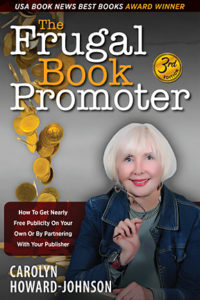
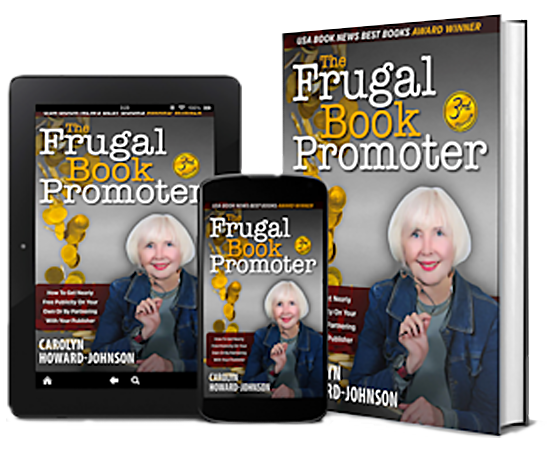
My copy of The Frugal Book Promoter

One of the many great things about Carolyn's books is she takes into consideration all avenues of publishing. Whether self-published or traditionally published, there is advice specific to each situation. Whenever I read one of her books, whether it is the Frugal Editor or the Frugal Book Promoter, it's with a highlighter, pen, and notepad ready. There is something to take note of on every page. 

To thank Carolyn for all of her help with the IWSG, this "Best Of" post is our thanks. 

Here are some of our favorite Carolyn lists and snippets of advice. 

Suggestions for preparing yourself to be the best publicity partner around. (From Carolyn's January 2014 IWSG post.)

1. Join organizations like IBPA (Independent Book Publishers Association) where you’ll learn to understand the world of publishing from every angle—your, that of your publicist and that of your publisher. And get the support you need along the way.

2. Subscribe to newsletters sent out my experts in the field of publishing. Dan Poynter, John Kremer, Penny C. Sansevieri, and one of my favorite publicity gurus Joan Stewart are all online resources for getting online information that isn’t rooted in myth and gossip. You’ll learn tons from my Sharing with Writers newsletter, too. Subscribe by sending a SUBSCRIBE message to CarolynHowardJ@AOL.com.

3. Take a class in public relations. The only way I know how to avoid drastic mistakes in choosing a class is to patronize your local college or attend writers’ conferences sponsored by universities.

4. One of the most frugal ways to learn a new skillset is to read. Most of those who publish free newsletters like the ones I mentioned above have books that will get you off on the right foot. Find mine here.

A list of the best way to help your writer friends. (From Carolyn's August 2019 IWSG post

1. Be a critique partner. We all need help polishing our manuscripts. As a critique partner, we also learn a lot about our own writing in the process.

2. Mark the book as ‘Want to Read’ on Goodreads. That helps it get noticed more. Plus vote for it if it appears on a Goodreads list.

3. Offer to host the author on your blog during his virtual tour. Either ask for a guest post or send interview questions. Even just a feature on release day helps spread the word.

4. Sign up to be on the author’s street team. You’ll promote on multiple platforms and get all sorts of cool bonus goodies.

5. Promote it on Facebook. Post notifications of the book’s upcoming release or host a Facebook party.

6. Promote the book on Twitter. Send out Tweets about the book – with an image. Retweet the author’s book tweets.

7. Promote the book on Instagram. If you have a review copy, take pictures of it. Same with Pinterest.

8. On release day, announce the book to your followers, friends, family, and fans, whether online or in the real world. Let them know they need to buy this book. Tell your local library and bookstore to order it. Hound them if you have to!

9. Buy the author’s book! Even if you got a free review copy. Years ago, Carolyn Howard Johnson said that was the number one thing you could do to support an author.

10. Review the book. Goodreads-Amazon-iTunes-Barnes and Noble – wherever! Just leave a review or at the very least a star rating. The book will get more notice with more reviews. Just make sure it’s an honest but not overly negative review. (If you’re out to slam other authors, you are in the wrong line of work.)

Tips on Monetizing to generate additional income (From Carolyn's August 2019 ISWG post) 

1. Offer ads or sponsorship in the backmatter of your book. Be sure your offer includes the ways the ad will benefit the advertiser or sponsor including how you will feature your benefactor in social networking you’ll be doing during the launch. 
2. Accept only professionally produced ads. 
3. Accept only ads that would interest your target audience. Be prepared to refuse some with the “not quite right” phrase that literary journals use to reject submissions. 
4. Limit the number of ads to just a few. 
5. Encourage ads that give discounts or freebies to benefit your readers. In fact, you could offer a discount on the price of the ad to those who do.
6. Don’t undersell your ad, especially if you already have an extensive platform. 

Best advice from Carolyn throughout the years from her April 2017 post

"Authors! We are ultimately responsible for our own careers."

So, start studying up and get to work! 


The Frugal Book Promoter, Third Edition! 

This multi award-winner, now in its third edition,  celebrates its 16th Anniversary as the flagship of Carolyn Howard-Johnson’s HowToDoItFrugally Series of books for writers. For only a few cents a day the third edition of The Frugal Book Promoter assures your book the best possible start in life. The author was inspired to write this book full of nitty-gritty how-tos for getting nearly-free publicity for her UCLA Writers’ Program class. A former publicist, journalist, and retailer, Carolyn shares her professional experience as well as practical tips gleaned from the successes of her own book campaigns. She tells authors how to do what their publishers can’t or won’t and why authors can often do their own promotion better than a PR professional.

Since its first release almost two decades ago, this book has won multiple awards:


Winner USA Book News Award 

Runner-up in the how-to category for the Los Angeles Book Festival 2012 awards

Global Ebooks Award Honorable Mention

Silver Medal from Military Writers Society of America

Wednesday, June 3, 2020

What's Happening with the IWSG?

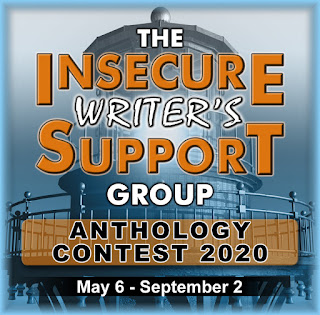
The annual anthology contest is open!

Theme: Dark Matter

Submissions accepted: May 6 - September 2, 2020
Guidelines and rules:

Word count: 4500-6000

Genre: Science Fiction
How to enter: Send your polished, formatted (double-spaced, no footers or headers), previously unpublished story to admin @ insecurewriterssupportgroup.com before the deadline passes. Please include your full contact details, your social links, and if you are part of the Blogging, Facebook, Instagram, or Twitter IWSG group.

Judging: The IWSG admins will create a shortlist of the best stories. The shortlist will then be sent to our official judges.

Our official awesome judges:


Dan Koboldt, author and #SFFpit founder
Dan Koboldt is the author of the Gateways to Alissia trilogy (Harper Voyager), the editor of Putting the Science in Fiction (Writers Digest, 2018), and the creator of the sci-fi adventure serial The Triangle (Serial Box, 2019). As a genetics researcher, he has co-authored more than 80 publications in Nature, Science, The New England Journal of Medicine, and other scientific journals. He is represented by Paul Stevens of Donald Maass Literary Agency.


Lynda R. Young, author
Lynda R. Young is an Aussie writing fantasy novels as Elle Cardy. Wielder’s Prize is her debut YA epic fantasy. She is also an editor, game developer, 3D artist, graphic designer, photographer, gamer and more.

Colleen Oefelein, agent, The Jennifer De Chiara Literary Agency
Colleen Oefelein is an author of YA, picture books, and author promotion guides, a devourer of books, and the owner of the book review site North of Normal. Formerly an associate agent and PR manager with Inklings Literary Agency, Colleen has hosted numerous “Pitch Perfect” and “Rejection Correction” workshops on Facebook and at conferences nationwide, and she’s mentored several authors one-on-one through online pitch contests such as Pitch Wars.
Damien Larkin, author
Damien Larkin is an Irish science fiction author and co-founder of the British and Irish Writing Community. His debut novel Big Red was published by Dancing Lemur Press and went on to be longlisted for the BSFA award for Best Novel. He currently lives in Dublin, Ireland and is working on his next novel Blood Red Sand.

is the editor and publisher of AntipodeanSF, Australia's longest running online speculative fiction magazine, regularly issued since January 1998. His qualifications and employment range from horticulture through electronics into literature and communications.


Julie Gwinn, agent, The Seymour Agency
Julie Gwinn most recently served as Marketing Manager for the Christian Living line at Abingdon Press and before that served as Trade Book Marketing Manager and then Fiction Publisher for the Pure Enjoyment line at B&H Publishing Group, a Division of LifeWay Christian Resources. Recently, she was awarded Editor of the Year from the American Christian Fiction Writers and won B&H’s first Christy award for Ginny Yttrup’s debut novel Words.
David Powers King, author
David's works include Woven, The Undead Road, and Full Dark: An Anthology. He currently resides in the Mountain West with his wife and 4 children.

Prizes: The winning stories will be edited and published by Dancing Lemur Press' imprint Freedom Fox Press next year in the IWSG anthology. Authors will receive royalties on books sold, both print and eBook. The top story will have the honor of giving the anthology its title. Please see their website for general guidelines on the types of stories they publish.

We’re excited to see the creativity and enthusiasm that’s such a part of this group put into action. So don your creative caps and start writing. And spread the word!


                                                                        *****


Have news and want a shout out? Email us!
Each month, we send out the IWSG newsletter packed with information, updates, and tips. If you'd like to be included or add quick promo for your work, just let us know.
Email me: elizabethseckman(at)ymail(dot)com
*please add IWSG shout out to the subject line


                                                                    *****


Have a question about marketing or publishing?


Carolyn Howard Johnson has a series of books that are a great resource for writers who need to do their own editing and promoting. She's one smart lady and she's agreed to help our writers by answering any question from editing to promotion to publishing. If you have a question you'd like Carolyn to answer, add it to the comments or email me at elizabethseckman(at)ymail(dot)come. Add IWSG Question to the subject line.


This multi award-winner, now in its third edition, celebrates its 16th Anniversary as the flagship of Carolyn Howard-Johnson’s


HowToDoItFrugally Series of books for writers. For only a few cents a day the third edition of The Frugal Book Promoter assures your book the best possible start in life. The author was inspired to write this book full of nitty-gritty how-tos for getting nearly-free publicity for her UCLA Writers’ Program class. A former publicist, journalist, and retailer, Carolyn shares her professional experience as well as practical tips gleaned from the successes of her own book campaigns. She tells authors how to do what their publishers can’t or won’t and why authors can often do their own promotion better than a PR professional. Check out Carolyn's website and see all of her books.

Monday, August 12, 2019

Sell Ads to Help Finance Your Self-Published Book or Promotional Book


By Carolyn Howard-Johnson, 
author of the multi award-winning HowToDoItFrugally Series 
of books for writers

I hate the word “monetize.”  
And I especially don’t like it when this word (it’s really ugly, isn’t it?) is mentioned in the same breath with books. But I’m going to talk about it anyway because, if authors do it right, using ads in their books or other promotional materials can subsidize the cost of publishing a book, costs like great editing, great cover design, and great indexing that they often scrimp on. 
Most every author is self-publishing something themselves these days. If not their books, then e-books or white papers that help them promote their work. Many of these books—are perfect for paid ads and ads in barter. You might also think about trading an ad for another service you need like a blog tour, book cover art, or printing. 
So, even if you do hate the idea, I’m asking you to keep reading. It’s important because many authors never make the money they spend of self-publishing back in royalties or even back-of-the-room sales. Read it with an open mind. You might change your mind, or you might think of way to adapt the idea to your needs and thus help assure a more profitable career as an author. And—trust me—you will discover at least one way you’ve seen back matter ads in books for a long time—all the way back to high school.
Ads in the back matter of books are becoming more accepted (and more ethical), if they are focused on the book’s target audience. Not too long ago, the LA Times reported Amazon puts ads in some Kindle readers and that they then sell them at 18% less than the ad-free device ($114.00). I figure they got that wrong. They might sell them for more because they can enhance the perceived value if the ads  include a discounted offer or essential free resource for its readers. 
Ads in disguise have been used in literary journals and other books for years. They usually come as an order page or a list (subtle or not-so-subtle) of related books that might interest a reader. Your high school yearbook featured pay-for ads, but they called them “sponsors.”  
So, if you decide to put ads into your books, how would you do it? 
~Offer ads or sponsorship in the backmatter of your book. Be sure your offer includes the ways the ad will benefit the advertiser or sponsor including how you will feature your benefactor in social networking you’ll be doing during the launch. 
~Accept only professionally produced ads. 
~Accept only ads that would interest your target audience. Be prepared to refuse some with the “not quite right” phrase that literary journals use to reject submissions. 
~Limit the number of ads to just a few. 
~Encourage ads that give discounts or freebies to benefit your readers. In fact, you could offer a discount on the price of the ad to those who do.
~Don’t undersell your ad, especially if you already have an extensive platform. 
Did I mention that when you use ads this way, your reader benefits. They learn about new resources and special discounts and those discounts may easily pay for the book (yours!) your reader just bought?  Ahem. 
If you are uncomfortable with this idea, start small. Start using ads only in your promotional e-books. Then move on. Eventually your readers may benefit from ads in your full-fledged, honest-to-goodness paperback or hardcover book!  
PS: Anyone with a product (yes, books are products!) or a service that would appeal to readers of The Frugal Book Promoter may e-mail me (HoJoNews@aol.com) for details of how we might partner on something like this for one of my new releases. I’m planning to update my little booklet, Great Little Last-Minute Editing Tips which is for sale to be used as an inexpensive thank-you greetings or gifts for writers but is also given as a little extra when writers sign up for my newsletter. Spaces are limited. 
 
Carolyn Howard-Johnson is a novelist, poet, and the author of the multi award-winning HowToDoItFrugally series of books for writers (http://www.howtodoitfrugally.com). That site includes a huge, free section of Resources for Writers. She also blogs writers’ resources at Writer’s Digest 101 Best Websites pick www.sharingwithwriters.blogspot.com.

Monday, March 12, 2018

Writers’ Conference Secrets for Success

By Carolyn Howard-Johnson
Author of the multi award-winning
HowToDoItFrugally series of books for writers

L Diane Wolfe, one of the forces behind The Insecure Writers Group asked me to share my enthusiasm for writer’s conferences with this video made at one my recent presentations at Bookbaby’s first ever conference in Philadelphia.


So, now you are convinced how much fun they can be—for both attendees and presenters!—I want to share some information on how to make conference more successful by planning in advance. You want to treat it like a garden and bring home all the ripe stuff that suits your palate. That means you have to organize. This partial excerpt from the chapter on writers’ conferences in The Frugal Book Promoter will help you do that.

Your notebook—either the old-fashioned paper kind or the one you set up on your laptop—is key to getting the most from a conference. These ideas come from the old fashioned way of doing it, but most can be adapted to your iPad or laptop.
  • Bring a seven-subject notebook (or seven files in your computer). Divide the notebook into sections that match your goals. These might include: Agents, Publishers, Promotion, Writing, and Other Contacts. Leave one section open for a category that crops up after you arrive.
  • On each separator page tape a number ten envelope in which you slip business cards, bookmarks, mini notes to yourself, and small brochures. When you arrive home, part of your filing and sorting will be done.
  • Take blank mailing labels to make custom index tabs that stick out from the edge of your notebook.
  • On the first night of the conference, clip and paste separate parts of the conference handouts and programs into corresponding segments of your notebook.
  • At the back of your conference notebook, make a directory section. Use the label index markers to delineate each one.

The first page is a name and address list for publishers. They should be listed in conference handouts but you may glean more from seminars. Star the publishers you spoke to personally. Make notes. What have they published that is similar to your book? Jot down anything that will help them remember you when you write to them and mention your encounter. Query letters work best when you indicate you are familiar with the person or company being queried.

Big Hint: When you talk to publishers always ask them what they do to promote their authors’ books. Pin them down to specifics.

The second directory page is for fellow authors. Jot notes on them, too. It’s no fun to arrive home with a useless business card.

Ditto for agents and for conference planners. You may be surprised at how often you’ll refer to this page and the good it will do you when you start to shop your next (or first) book.

A page for “Other Resources” includes information on anything from other conferences to books fellow attendees and presenters recommended to you—including the books you bought at the conference. This is the continuing education aspect of a writers’ conference.

Designate a few pages for writing ideas.

The final pages are for new promotion ideas.

Hint: Bring a small pouch of tools—I use one I received with an Estée Lauder gift-with-purchase. Toss into it color-coded pens, snub-nosed scissors (sharp ones may not get you through airport security), a small roll of cellophane tape, your index labels, paperclips, strong see-through packing tape, hammer, tacks, razor, ChapStick, hole puncher, breath mints, elastic bands, Band-Aids, and your personal medication. Don’t unpack this when you get home. You’ll need it in the future for other conferences, book signings, book fairs, and other promotional events you attend and eventually may become a presenter or key note speaker!

You can use a conference to promote, too.
  • Some conferences offer tables where participants can leave promotional handouts for their books or services. Before you leave home, ask your conference coordinator how you might utilize this opportunity and print and pack anything you might need.
  • Ask the conference coordinator if they publish a newsletter or journal. If so, send the editor media releases as your career moves along.
  • Take your business cards to the conference. Give them out liberally. They won’t do you any good in your pocket.
  • If you have already published a book, take your bookmarks to give to others. And a few books, as well. Authors tend to forget to give their books to people who are in a position to recommend it.
  • If you have an area of expertise that would interest the conference director or programmer, introduce yourself. She may be busy, so keep your pitch very short and follow up later.
  • Think in terms of gathering endorsements for your book to use in the future. You are always building a network but you’ll find influencers—maybe some with name recognition—at conferences.


Carolyn Howard-Johnson is the author of the multi award-winning HowToDoItFrugally series of book for writers. Learn more about them at How to do it Frugally. She also invites you to subscribe to her writers’ resources blog, Writer’s Digest 101 Best Websites pick Sharing with Writers. Follow her tweets at @FrugalBookPromo And that new edition of The Frugal Book Promoter? It won a USA Book News award, its second—one for the first edition, one for the second--and the e-book edition was honored at Dan Poynter's Global EBook Awards. As an aside, please leave a comment and a like on YouTube; it’s part of “pass it forward” and “sharingwithwriters” concept for marketing success.

Monday, April 24, 2017

Why Getting Great Reviews Is Your Job - Carolyn Howard-Johnson


Today we have the honor of hosting a special excerpt from Carolyn Howard-Johnson's new book. Getting great book reviews is something we all want to know how to do, right? Well, Carolyn is here to tell us why it's our job to get them.

Take it away, Carolyn!


**Excerpted from Carolyn’s new How To Get Great Book Reviews Frugally and Ethically: The ins and outs of using free reviews to build and sustain a writing career


You need this article! Here’s why:


In spite of a contract or even an advance your publisher may not be a true publisher. True publishing includes the marketing of a book, Think big names like HarperCollins, Knopf, and Writers’ Digest, the publisher of Nina Amir’s new Creative Visualization. They assign a marketing budget to your book and an actual marketing department complete with actual human-type marketers who are trained in the specialized field of not just marketing, but marketing books. Except for those who write only for pleasure, there is no reason to publish a book that doesn’t get read.

The sad part is: Even those big publishers need the authors’ help. There is no free lunch when it comes to the marketing of a book—including the getting of reviews.

Some publishers—even traditional publishers—may not respect tradition, be uncooperative or goof. One of my writing critique partners was published with a fine press. When she learned they had not sent advance review copies of her literary novel to the most prestigious review journals before their strict sixteen-week deadline, she was naturally upset. They explained it was a snafu that could not be fixed. That was no comfort at all. It did help her to know that because thousands of galleys sent to the important review publications lie fallow in slush piles, the chances of having a book reviewed by a major journal—even one published traditionally let alone getting a glowing review—is remote. Because she had me to nag her, she moved on to alternative marketing and review-getting strategies found in Chapter Six of this book. Using those methods, she was still able to schedule several major bookstore appearances that tend to favor established names and rely on big-journal reviews in their decision-making process. Nevertheless, it’s not the kind of loss any author wants to face.

These days most small publishers have no marketing department—or marketing plan. In fact, many admit that when it comes to marketing, you are on your own. No offense, publishers. I know many of you do a terrific job considering the profit margin in publishing these days. Let’s face it, you can use help, and you don’t need to deal with disappointed (irate?) authors. And, authors! We are ultimately responsible for our own careers. Sometimes when we wait to take responsibility, it is too late in the publishing game.

Some publishers charge the author an additional or separate fee for marketing. Many who offer marketing packages do not offer a review-getting package. If they do, the review their authors get is a paid-for review, which is definitely not the route you want to go. More on that later in this chapter.

Many publishers do not even have lists of people to contact who might help your marketing with endorsements or reviews. Further, many big publishers are relying on bloggers for their review process more and more as print journals and newspaper book sections shrink or disappear and as they begin to understand that grassroots publicity—reviews or otherwise—can produce a very green crop. And bloggers? Well, that’s a resource pool you can easily plumb yourself.

My first publisher supplied review copies only upon written request from individual reviewers. They did not honor requests generated by their authors’ initiatives. This meant that I could not count on them to supply books to reviewers I had successfully queried for a review. Unless the reviewer accepted e-copies (and many reviewers don’t!), I had to order copiesdirectly from the publisher and then reship them to my reviewers. This method is slow, cumbersome, unnecessarily expensive, unprofessional, and discourages authors from trying to get reviews on their own.

Publishers should offer review copies to a list of reviewers—even unestablished grassroots bloggers—who have been responsive to their authors in the past. And they certainly should not charge an author for review copies. Publishers have a profit margin and publicity obtained by their authors (including reviews) affects their bottom line, too. They should send their author a thank you (or a red rose!) along with encouragement to keep up the good work

Publishers should also market their books. That means that even if they are too small or underfunded to have a marketing department, they should have a list of reviewers to query for reviews, a list of influential people to provide blurbs for your cover, access to book cover designers (not just great graphic designers) who know what sells books, and a whole lot more. Ask potential publishers about their marketing process before you sign, but—even if you feel assured after having that conversation—it’s best to assume you may be on your own.

And here’s more: Big publishers are relying on bloggers for their review process as print journals and newspaper book sections shrink or disappear and as they begin to understand that grassroots publicity—reviews or otherwise—can produce a very green crop. Bloggers, you say? Well, that’s a resource pool you can easily plumb yourself

So, the marketing part of your book that includes finding the right reviewers to read and comment on your book will—in most cases—be up to you and well within your skill set after reading this book. And even when you have the luxury of a marketing department behind you, those authors who know how to get reviews on their own can keep a book alive for an infinite amount of time after their publishers relegate their books to a backlist or their contract expires. 
Note: If it is too late to apply this information to the process you use in choosing a publisher, tactfully take hold and guide the publisher you have through the review process. There are lots of ways to do that in this book. I love Nike’s advice to “Just do it!” only I add “yourself” to the motto. Many publishers are in your employ. You may be paying them for services. At the very least, when your book sells, it makes money for the publisher. You don’t have to ask for permission (though it never hurts to listen to their reasoning before you make a decision).


Carolyn Howard-Johnson brings her experience as a publicist, journalist, marketer, and retailer to the advice she gives in her HowToDoItFrugally series of books for writers and the many classes she taught for nearly a decade as instructor for UCLA Extension’s world-renown Writers’ Program. The books in her HowToDoItFrugally Series of books for writers have won multiple awards. That series includes both the first and second editions ofThe Frugal Book Promoter and The Frugal Editor won awards from USA Book News, Readers’ Views Literary Award, the marketing award from Next Generation Indie Books and others including the coveted Irwin award. Her next book in the HowToDoItFrugally series for writers will be How To Get Great Book Reviews Frugally and Ethically.

Multi award-winning novelist, poet, and author of the HowToDoItFrugally Series of books for writers.

Twitter: @FrugalBookPromo
E-mail: hojonews@aol.com


Thank you for sharing your insight on book reviews and how to get them, Carolyn!

Please leave Carolyn a comment. :)


Wednesday, January 29, 2014

You’re The Best Publicist for Your Book by Carolyn Howard-Johnson

Today the IWSG has the honor of hosting the master of book publicity, Carolyn Howard-Johnson.

You’re The Best Publicist for Your Book
or
Why Your Publisher Can’t Sell Your Book Without You

By Carolyn Howard-Johnson

If your name isn't King or Grisham or Roberts you've probably already figured out that you need to do a lot of publicity on your own. But did you know that your publisher can’t do it without you?

Sure you can hire a publicist. A big publisher might even assign one of their own to you, but you are the one who must show up for the signings. You are the one readers want to know about. And you are the one who is most passionate about your book.

I have a publicist friend who is also an author. He rightfully claims that he could never find a PR person who would do the same kind of job he does, including the time he spends on his own PR work. How could anyone argue with that? We all are our own best publicists, even if we hire someone else.

But what if we don't have the time or expertise?

We can learn to do it ourselves. After all, we are writers. We should be able to grasp the knack of how to write a media release.

But the best way to do it is to learn a lot about the marketing of books and then partner with expert publicists or people who can help you with specific projects like online book tours. And partnering with them in a way that won’t eat up your advance or cost you more than you’re likely to make on your book.

Here are some suggestions for preparing yourself to be the best publicity partner around.

1. Join organizations like IBPA (Independent Book Publishers Association) where you’ll learn to understand the world of publishing from every angle—your, that of your publicist and that of your publisher. And get the support you need along the way.

2. Subscribe to newsletters sent out my experts in the field of publishing. Dan Poynter, John Kremer, Penny C. Sansevieri, and one of my favorite publicity gurus Joan Stewart are all online resources for getting online information that isn’t rooted in myth and gossip. You’ll learn tons from my Sharing with Writers newsletter, too. Subscribe by sending a SUBSCRIBE message to CarolynHowardJ@AOL.com.

3. Take a class in public relations. The only way I know how to avoid drastic mistakes in choosing a class is to patronize your local college or attend writers’ conferences sponsored by universities.

4. One of the most frugal ways to learn a new skillset is to read. Most of those who publish free newsletters like the ones I mentioned above have books that will get you off on the right foot. Find mine here.

The next question is how do you find the best help with publicity possible.

1. Consider what you need and how much time you can put into it. Your budget may not accommodate a full-service publicist. You may not have the time to fully participate with all of those services.

2. If that’s the case, consider people who will work with you piecemeal like Penny Sansevieri. You may need an online book tour. I like Denise Cassino's book launch service for that. Contact her at dencassino@gmail.com . It shouldn’t be too expensive to get help when you do it in bits and pieces. And when you work with others, many of the contacts you get from your service will become contacts for the life of your writing career. Or you may need help writing your first release so you can do it yourself. That kind of help is available, too, from people like Mindy Philips Lawrence, mplcreative1@aol.com .

3. Before you hire anyone consider their Rolodex. I'm talking about a file of contacts that are real personal, working relationships with editors, radio hosts, etc. Ask what kind of publicity have they gotten for their other clients? Consider whether those contacts are people who might have an interest in a project like yours. A book publicist who has had mostly experience with mystery writers, deals mostly with books stores that dedicate themselves to stories about crime, and has a huge file of names of reviewers interested in psycho/thrillers probably won't be able to do you much good if yours is a literary novel. And vice versa.

4. As you have already guessed, you want someone who has clients similar to you. Check that out, but also check with the clients. Were they satisfied? If not, why not. Their expectations may have been different from yours. Further, if there were some gaps that you consider important, you may be able to negotiate with your newfound partner to include those services in the publicity package you are contracting for.

Am I speaking from experience? You betcha. And lukewarm results were not the fault of my publicist. She did a great job with what she had. She just didn't have what I needed! If you do your homework, you’ll be happier with your publicity campaign and your publicist will be able to help you reach your goals more quickly…and they’ll be happier with you.

------

Carolyn Howard-Johnson is the author of so-called hard-to-promote genres (www.howtodoitfrugally.com/literary_books.htm) and of the multi award-winning HowToDoItFrugally series of books for writers, because she likes helping other authors avoid the same promotion potholes she once fell into. She blogs frugal book promotion and great writing ideas at Sharing With Writers and read her multi award-winning Frugal Book Promoter and the just-released e-book version (2nd edition!) of multi award-winning The Frugal Editor where you’ll learn how to write killer query letters—to agents, publishers, feature editors and all the other gatekeepers who can make a difference for your book.