Showing posts with label writer advice. Show all posts

Tuesday, March 29, 2022

Stop Shoulding Yourself

Should.


This familiar word wraps me up in its arms and holds me close, filling me with guilt and comforting me with an apology to the world. Its unrelenting judgment soothes me with its familiarity. The addictive powers of “Should” pull me into their welcome grasp and leave me humiliated by my lack of willpower, sneaking out of their apartment after the lust has disappeared and all that’s left is the cold grey light of disappointment. 

Should” Pressures Us

When we say “I should,” we state what we insist we must do. We hear the blog post or a parent’s stern admonition or the guru we follow. Actions we believe someone else or our community or the world demands of us. Each time you say “I should,” an unfulfilled assumption unfurls from your tongue, and guilt breaks through the dam surrounding your soul, flooding it with disgust.

Guilt around these “I shoulds” helps no one. Guilt fills your brain up with static, refusing to allow anything else entry. Where is the room for your writing? Gone because you’re feeling guilty about not writing!

It’s a vicious cycle, and it’s one inflicted on us by ourselves.

Luckily, one radical practice frees you from this cycle.

Stop using the word “should.”

That’s it. Excise “should” from your vocabulary. Does it sound easy? Because it is not. That “should” is trained into us by our family, our schools, our community, our society. Shaking it loose takes time and effort. This is why it’s a practice—not a quick fix!

The first step? Stopping your mouth from forming the word.

And the real trick to stop the cycle and avoid the guilt trip from yourself?

Define the expectation. When you stop that “should,” replace the word with another one. What’s the first word that comes to mind to replace it? Why that word? What does that word tell you about this expectation you hold?

Inquire why you must do this thing that you “should” do. What goal is achieved by doing it? Can the goal be met by taking a different action?

The rote “I should ” now becomes an “I can.” Or maybe, the “I should” becomes an “I don’t need to” or an “I want to.”

And that’s ok.

This transformation of the “should” redirects your energy from wallowing guilt into practical action. It encourages you to work on goals infused with your meaning rather than the goals that you imagine everyone expects.

And that is what I am asking you to do by releasing “should” from your vocabulary. Let’s give it a try.

One of my not-so-favorites is “I should work on my writing.”

First, I eliminate the word and substitute it with another. My first thought is to use “will” in its place. Immediately, “will” sends up a flare of alarm. That word sets up a new way to add pressure. Bye-bye, “will”!

However, “I can work on my writing” tells me that working on my writing is possible.

Now I ask why.

Why can I work on my writing?

Because I can physically work on my writing. I can sit down at the computer and type words into the document and write. It’s a possibility.

Why am I not working on my writing?

Because I work hard all day and I’m tired at night. And on the weekend, I have to do my chores and recover from the week. And I’m at a place in my writing where I feel weak.

Now I have some good information! Now, instead of just feeling guilty, I can delve into the reasons behind my excuses. And solutions to very real problems can reveal themselves.

  • Maybe I can ask my wife to help with the chores and free up a little time for me to write on the weekend.

  • Maybe I can rise early in the morning to write before work since I’m tired at night.

  • Maybe I can let myself off the writing hook for a couple of weeks until this super-stressful deadline at work has passed.

  • Maybe I can strengthen my work by committing to improve just one sentence a day. Or every day-ish.

Options exist. A potential solution reveals itself.

And the “should” no longer controls my thoughts.

The practice of stopping your “should” cycle is one that you will find needs constant attention, especially for the first few weeks. Once you start noticing your “shoulds,” they will surprise you with their frequency. Over time, their presence will slow to a trickle, but never quite disappear. Perfection in this practice may not be possible (I certainly haven’t found it yet!), but committing to the practice of inquiring into your “shoulds” can empower you to make progress toward your dreams.

One final thing—sometimes what the “should” reveals is that you don’t really want to pursue that goal. It’s just a goal that other people expect of you but doesn’t align with your heart. Or it’s a thing or action that someone has told you that you need to get to your goal but the action or thing doesn’t ring true for your journey. If the answer you discover in your inquiry is “That feels wrong to me,” respect your inner voice and find another way.

“Should” happens. Inquiring into each “should” reveals the reasoning behind the expectation. Facing the actualities of each “should” reveals a list of barriers that you can overcome to achieve your real goals. Delving into the options each “should” reveals empowers you to take action.

Begin where you are. Define the expectation. Ask “why.” Try not to judge yourself for falling into the “should” trap of expectations.

We all do it.

And the lessons we learn from those “shoulds” empower us to achieve our heart's goals.


*This post is informed by and uses Kaizen-Muse Creativity Coaching Tools™.


LA (as in tra-la-la) Bourgeois uses Kaizen-Muse Creativity Coaching tools™ to break down resistance, procrastination, and overwhelm while gently encouraging you with humor and heart. Are you ready to embrace joy as you pursue your creative goals? Discover more at her website, labourgeois.biz


Tuesday, December 7, 2021

The Best of...Carolyn Howard-Johnson


Carolyn Howard-Johnson is a frequent help to the IWSG with her blog posts and newsletter tidbits that offer writers advice that is entertaining, helpful, and easy to digest.

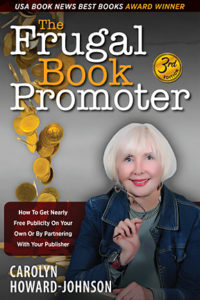
My copy of The Frugal Book Promoter

One of the many great things about Carolyn's books is she takes into consideration all avenues of publishing. Whether self-published or traditionally published, there is advice specific to each situation. Whenever I read one of her books, whether it is the Frugal Editor or the Frugal Book Promoter, it's with a highlighter, pen, and notepad ready. There is something to take note of on every page. 

To thank Carolyn for all of her help with the IWSG, this "Best Of" post is our thanks. 

Here are some of our favorite Carolyn lists and snippets of advice. 

Suggestions for preparing yourself to be the best publicity partner around. (From Carolyn's January 2014 IWSG post.)

1. Join organizations like IBPA (Independent Book Publishers Association) where you’ll learn to understand the world of publishing from every angle—your, that of your publicist and that of your publisher. And get the support you need along the way.

2. Subscribe to newsletters sent out my experts in the field of publishing. Dan Poynter, John Kremer, Penny C. Sansevieri, and one of my favorite publicity gurus Joan Stewart are all online resources for getting online information that isn’t rooted in myth and gossip. You’ll learn tons from my Sharing with Writers newsletter, too. Subscribe by sending a SUBSCRIBE message to CarolynHowardJ@AOL.com.

3. Take a class in public relations. The only way I know how to avoid drastic mistakes in choosing a class is to patronize your local college or attend writers’ conferences sponsored by universities.

4. One of the most frugal ways to learn a new skillset is to read. Most of those who publish free newsletters like the ones I mentioned above have books that will get you off on the right foot. Find mine here.

A list of the best way to help your writer friends. (From Carolyn's August 2019 IWSG post

1. Be a critique partner. We all need help polishing our manuscripts. As a critique partner, we also learn a lot about our own writing in the process.

2. Mark the book as ‘Want to Read’ on Goodreads. That helps it get noticed more. Plus vote for it if it appears on a Goodreads list.

3. Offer to host the author on your blog during his virtual tour. Either ask for a guest post or send interview questions. Even just a feature on release day helps spread the word.

4. Sign up to be on the author’s street team. You’ll promote on multiple platforms and get all sorts of cool bonus goodies.

5. Promote it on Facebook. Post notifications of the book’s upcoming release or host a Facebook party.

6. Promote the book on Twitter. Send out Tweets about the book – with an image. Retweet the author’s book tweets.

7. Promote the book on Instagram. If you have a review copy, take pictures of it. Same with Pinterest.

8. On release day, announce the book to your followers, friends, family, and fans, whether online or in the real world. Let them know they need to buy this book. Tell your local library and bookstore to order it. Hound them if you have to!

9. Buy the author’s book! Even if you got a free review copy. Years ago, Carolyn Howard Johnson said that was the number one thing you could do to support an author.

10. Review the book. Goodreads-Amazon-iTunes-Barnes and Noble – wherever! Just leave a review or at the very least a star rating. The book will get more notice with more reviews. Just make sure it’s an honest but not overly negative review. (If you’re out to slam other authors, you are in the wrong line of work.)

Tips on Monetizing to generate additional income (From Carolyn's August 2019 ISWG post) 

1. Offer ads or sponsorship in the backmatter of your book. Be sure your offer includes the ways the ad will benefit the advertiser or sponsor including how you will feature your benefactor in social networking you’ll be doing during the launch. 
2. Accept only professionally produced ads. 
3. Accept only ads that would interest your target audience. Be prepared to refuse some with the “not quite right” phrase that literary journals use to reject submissions. 
4. Limit the number of ads to just a few. 
5. Encourage ads that give discounts or freebies to benefit your readers. In fact, you could offer a discount on the price of the ad to those who do.
6. Don’t undersell your ad, especially if you already have an extensive platform. 

Best advice from Carolyn throughout the years from her April 2017 post

"Authors! We are ultimately responsible for our own careers."

So, start studying up and get to work! 


The Frugal Book Promoter, Third Edition! 

This multi award-winner, now in its third edition,  celebrates its 16th Anniversary as the flagship of Carolyn Howard-Johnson’s HowToDoItFrugally Series of books for writers. For only a few cents a day the third edition of The Frugal Book Promoter assures your book the best possible start in life. The author was inspired to write this book full of nitty-gritty how-tos for getting nearly-free publicity for her UCLA Writers’ Program class. A former publicist, journalist, and retailer, Carolyn shares her professional experience as well as practical tips gleaned from the successes of her own book campaigns. She tells authors how to do what their publishers can’t or won’t and why authors can often do their own promotion better than a PR professional.

Since its first release almost two decades ago, this book has won multiple awards:


Winner USA Book News Award 

Runner-up in the how-to category for the Los Angeles Book Festival 2012 awards

Global Ebooks Award Honorable Mention

Silver Medal from Military Writers Society of America

Monday, November 8, 2021

A Teen Writer's Perspective


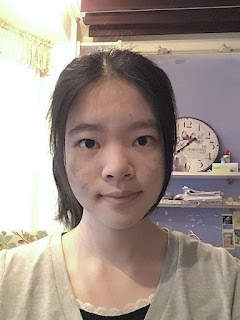
16 year-old novelist, Hermione Lee

Hi, everyone. I'm Hermione Lee. It's a huge honor to be invited to do a blog post here on Insecure Writers Support Group. In this post, I'll be discussing my journey of publication and the lessons I learnt along the way. 

I've always known I'd be a writer. Fortune smiled upon me when I was thirteen (a month before I turned fourteen), bestowing upon me a story idea inspired by the fountain in the middle of the courtyard in my school. I birthed a manuscript titled In the Name of the Otherworld the next year in February. 

The thought of completing a novel at my age thrilled me, but it also made me extremely pompous at the same time. I sent my manuscript to my aunt, who was an expert in English. Expecting a positive reply complimenting my incredible work, I waited patiently. 

And then came the phone call 

The feedback I reaped was far from my expectations. My aunt spotted every error in the manuscript I deemed a bestseller-to-be, from unreasonable scenes to trashy sentences. Thanking her, I decided to respect her opinion, although I thought to myself there was no need to heed her advice. I didn’t think there was anything wrong with it. 

During the next six months, I started writing a collection of fantasy adventure short stories inspired by the educational magazines our English teacher made us read. I ended up growing a lot, honing my craft and skills on creative writing. After I completed them, I went back to edit In the Name of the Otherworld. My growth and improvement allowed me to realize what was wrong with it. The prose was a nightmare, and the characters sounded like babies trying to dictate classical literature. The problem? I grew up reading not only books with elegant prose but also those with ridiculous wording meant to humor the readers. As a result, I didn’t have a definite style or tone of writing. In my prose, you'd spot a pretty metaphor here, but some cheap, colloquial wording there, which made the whole manuscript beyond awkward. 

I decided to rewrite my book, which was a draining project. It took me three months, but I finally succeeded in taming the monster. After a few more rewrites, I sent it to the Leapfrog Fiction Contest, expecting an award, which included publication. Again, my hope was shattered. Another rejection. 

It was about that time I started entering Writers of the Future, a quarterly fantasy and sci-fi short story contest. On the forum, I encountered many benefactors who selflessly taught novices like me all they knew. After giving In the Name of the Otherworld a few more rounds of editing and rewrites, I sent it on its way to World Castle Publishing, crossing my fingers for a green light. 

On that fateful Sunday morning four months later, World Castle Publishing sent me an acceptance letter and signed a contract with me. It was the best day of my life. My book then went into editing, and I got to work with a great editor who was very professional and loved her career. 

In the Name of the Otherworld garnered its first award in the first week of September (the Literary Titan silver book award), and was soon released. The reception in Taiwan stunned me. I was (and still am) #1 on the New Releases in the English YA fiction bestsellers list. It did not take long for World Castle to accept both the sequel and third book of the Otherworld trilogy, which puts a smile on my face every time I think about it. It's been a long way, but now as I retrace my steps, I wouldn’t change a thing about my journey. 

What I Learned

1. Don't tell yourself what you can or can’t do. Human potential knows no limits.

Too frequently do we self-reject. When I was outlining my second book, I told myself I was being ridiculous. There were crazy scenes—a haunted house scene, a scaling-a-fantasy-mountain scene, and a chase-in-an-arboretum scene. I made the grave mistake of staring at my outline for weeks instead of working on it. 

But when I got the project started, I realized it wasn’t that difficult at all. The writing process was easy, enjoyable, even. So next time a brilliant story idea strikes you, just write it! Miracles only occur when you believe in them. A story won’t write itself. You have to complete it. And in order to do that, you have to first believe you can. 

2. Embrace criticism. It is like medicine, bitter but beneficial.

There are two kinds of criticism—hate speech and constructive criticism. The former is vile and meaningless, yet the latter can be truly beneficial. 

I grew from criticism myself. Had my aunt been too shy to point out the absurdity of my plot and the unlikeliness of my characters, I would have mailed that manuscript out to a publisher and be rewarded with a well-deserved rejection. Next time when someone criticizes your work, listen closely. Are they making valid points? Would your story be better if you heed their advice? 

3. Never give up. Perseverance can yield rewards beyond your imagination. Don’t let your stories die in you.

As a writer on his / her journey of becoming an author, there will be setbacks—loads of them. People in your life may mock your efforts and discourage you from chasing your dreams. Don’t let them win. Prove them wrong. Keep writing and submitting, and you’ll get there.

In my journey, it took two and a half years to earn the contract for my first book. I’m glad I didn’t let my stories die in me and instead chose to write them down and get them published. Should I have given up or quitted halfway, I'd never know how much potential my story held. So I advise you all to do the same. Believe anything is possible as long as you've got perseverance and grit.


Hermione Lee 

Available Now 
Known for her debut novel In the Name of the Otherworld, Hermione Lee is a teen author born and raised in Taiwan, where everyone and everything in her life stimulated her rich imagination and inspired her to write. Although she prefers writing stories in her grandma's quaint, cozy home, she writes anytime and anywhere. She loves experimenting with words and discovering new formulas to beautiful prose. To her, words are portals that whisk her to whimsical worlds of magic. When Hermione isn't writing, she indulges herself in epic tales of fantasy, horror and adventure; but mostly, dwelling in her reverie. 

"Fight for what you believe in, believe in what you fight for." Hermione's life motto says a lot about her stories. This sentence best represents her journey of becoming a writer. She waged a constant war against invisible enemies - self-doubt, self-discrimination, and of course, countless rejections. However, these struggles only strengthened her will to succeed and pursue her ambition. Along the way, Hermione learned to stick to her goals, have humility and perseverance, and stay loyal to her own beliefs. Her personality is strongly projected on the characters she created; firm, unyielding, and with a thirst to prove themselves.

When Hermione first started writing, she had eyes for only the fame and recognition accompanied by success; however, her opinions have matured greatly during the past few years. She continues to write stories nowadays, but out of sheer interest and passion rather than gaining profit.


Tuesday, January 12, 2021

The Best Free and Low-Cost Ways To Sell Books


The ASPIRE Book Marketing Method


There are thousands of ways to market your book. Rather than being empowering, that can be daunting to try to sift and sort through all those strategies. This is why I set out to identify the best of the best strategies that can generate potentially thousands of book sales… all without costing you an arm and a leg.

Enter The ASPIRE Method. This is a collection of the most effective book marketing strategies. If you’ve been around the author world for a while, you’ll see most of these strategies aren’t “new.” Instead, these are the tried-and-true methods that will work for years to come to sell your books.

A - Ads
While ads aren’t free, with a platform like Amazon ads, you can run ads for as little as a dollar a day. For some books, I’ve seen returns of over 5x. That means for every dollar invested, the author made over $5 in royalties.

That said, some authors make little money (or even lose money) on ads if they don’t have the right approach dialed in. So I recommend running ads only after you have a great cover, solid description, and at least 10 reviews in addition to studying how the advertising platform works.


S - Social Media
No matter what genre you write in, chances are, your audience is on social media. The point of social media though isn’t to shamelessly post your book link in groups. Rather, it’s to build real relationships with readers and fellow authors. You can do this by contributing to author and reader groups. Once you have these relationships developed, you can then invite people you’ve connected with to subscribe to your channels. 


P - Platforms
Hal Elrod sold over a million copies of his self-published book The Miracle Morning. He said his #1 strategy was going on podcasts. Platforms, which include podcasts, publications, and stages, allow you to get in front of your ideal readers for free.

Both fiction and non-fiction authors can find plenty of podcasts and publications that feature authors in almost every genre. Once you’re featured on a platform, make sure you have a link to drive people back to your own email list.


I - Influencers
When I looked at the last ten books I bought, over half of them I purchased because someone I trusted recommended it. Imagine having a big name in your genre promoting your book for you. This is the power of influencer marketing.

The key to getting influencers to promote your book is to, counter-intuitively, NOT try to get them to promote your book. At least not at first. Instead, start a relationship with them.

Rather than approaching them with a “What can I get?” attitude, approach them with a “What can I give?” attitude. You can do this by sharing their work, providing them a glowing testimonial, and even just offering them sincere words of appreciation.

Then, once you have a relationship established, see if they’d be interested in checking out your book. Influencer marketing has been responsible for thousands of sales in my business, and I did this even when I was a ‘no-name’ author starting out.


R - Reader Referrals
Your readers and fans can be a great source of sales. Your fans often WANT to help you spread the word. Your job is to give them a clear direction on exactly how to do that. The key here is to ask yourself, “How can I make it easy and fun for readers to share my work?”

Simple strategies include offering prizes for readers who post pictures of your book on social media and providing them with graphics and text they can post. 


E - Email Marketing
All roads lead back to email. Every other strategy ideally builds your email list. The biggest authors I’ve talked to all said their email list is responsible for the vast majority of their sales. So whether it’s going on podcasts or posting on social media, the goal should be to eventually bring people back from those places to your email list.

Once a reader is on your list, make sure you’re engaging them regularly with entertaining content that keeps you top of their mind and primed to buy your books. 


Conclusion

The good news is, you don’t need to do all of these things. If you only did one or two of these strategies, such as guest podcasting and email marketing, that could be all you need to build a prosperous author business.

Bruce Lee said, ”I fear not the man who has practiced 10,000 kicks once, but I fear the man who has practiced one kick 10,000 times.”

So if social media isn’t your thing, that’s cool. You may find you’d rather build relationships with influencers or write guest posts. The key is to find what plays well to your strengths and go all in. With this approach, you’ll find you only need to do a few things extremely well to achieve your most ambitious author goals.

Derek Doepker 

Derek Doepker went from being a broke valet parker to a 7x bestselling author. He's sold over 75,000 books sold using free and low-cost marketing strategies. He now shares these strategies with authors through workshops, courses, and retreats empowering them to turn their passion for writing into a thriving business. Discover more about his work and download a free copy of Why Authors Fail at https://bestsellersecrets.com